


The ceiling is often the most overlooked surface when designing home interiors. Yet this “fifth wall” represents an extraordinary opportunity to give character and personality to spaces.Decorating the ceiling means transforming an anonymous surface into a distinctive feature that catches the eye and completes the design of every room. In this complete guide we will explore all the ideas for cladding a ceiling, from classic solutions like decorative moldings to modern trends with LEDs and plasterboard false ceilings. You’ll discover how to choose the right materials, which colors best enhance your spaces, and how to visualize the final result even before starting the work.
Why decorating the ceiling makes a difference
The ceiling covers the entire surface of a room, yet in most homes it remains simply white. This choice, while safe, represents a missed opportunity. A decorated ceiling can completely change the perception of a space: making a room seem taller or more intimate, creating focal points that guide the eye, and adding that touch of originality that distinguishes a curated environment from an ordinary one. Ceiling decorations are not just about aesthetics. A well-designed false ceiling can hide systems and pipes, improve acoustic and thermal insulation, and integrate sophisticated lighting systems. In other words, cladding a ceiling means combining functionality and design in a single intervention.
The best ideas to decorate the ceiling
The solutions for transforming a ceiling are many and adapt to every style and budget. Let’s take a closer look at the most effective options, from structural coverings to lighter decorative solutions.
Plasterboard false ceiling
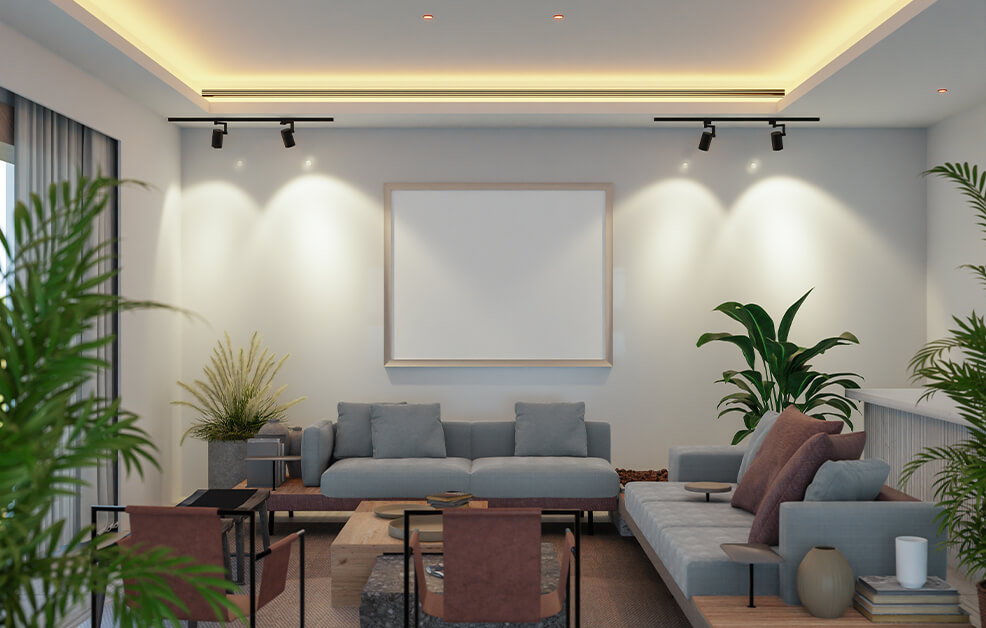
The false ceiling in plasterboard represents one of the most widespread solutions for decorating the ceiling in a modern and functional way. This structure, made of gypsum panels covered with cardboard, is fixed to the original ceiling creating a cavity that can house electrical systems, ducting, and lighting systems.
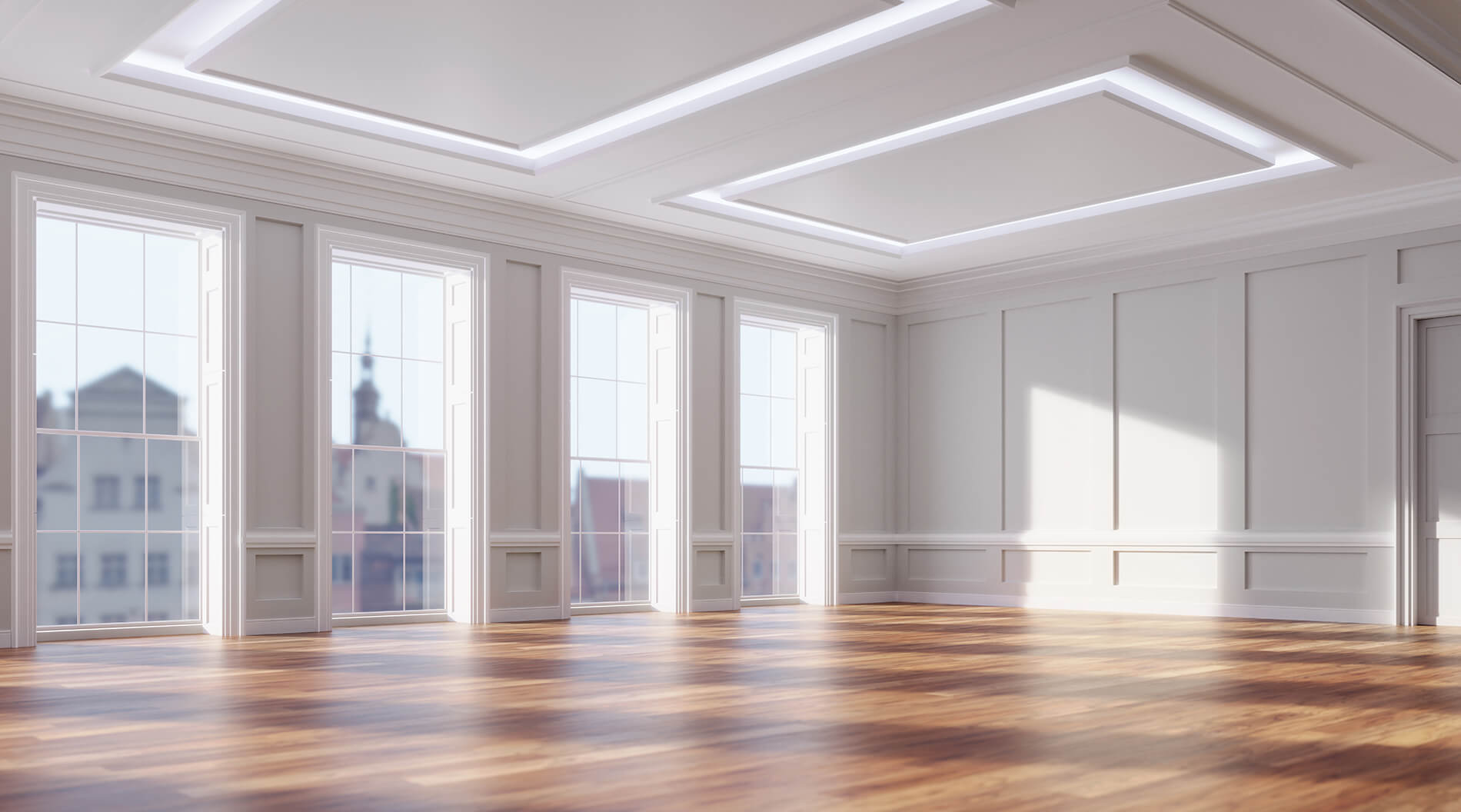
The advantages of plasterboard are numerous: it is an affordable material, easy to work with, and allows the creation of custom shapes. You can create perimeter coves to hide LED strips, create drops that define functional areas of an open space, or design three-dimensional geometries for a scenic effect.
For humid environments like the bathroom, there are moisture-resistant plasterboard panels specifically treated to withstand humidity. This makes decorative false ceilings a solution suitable for virtually every room in the house.
LED strips and spotlights
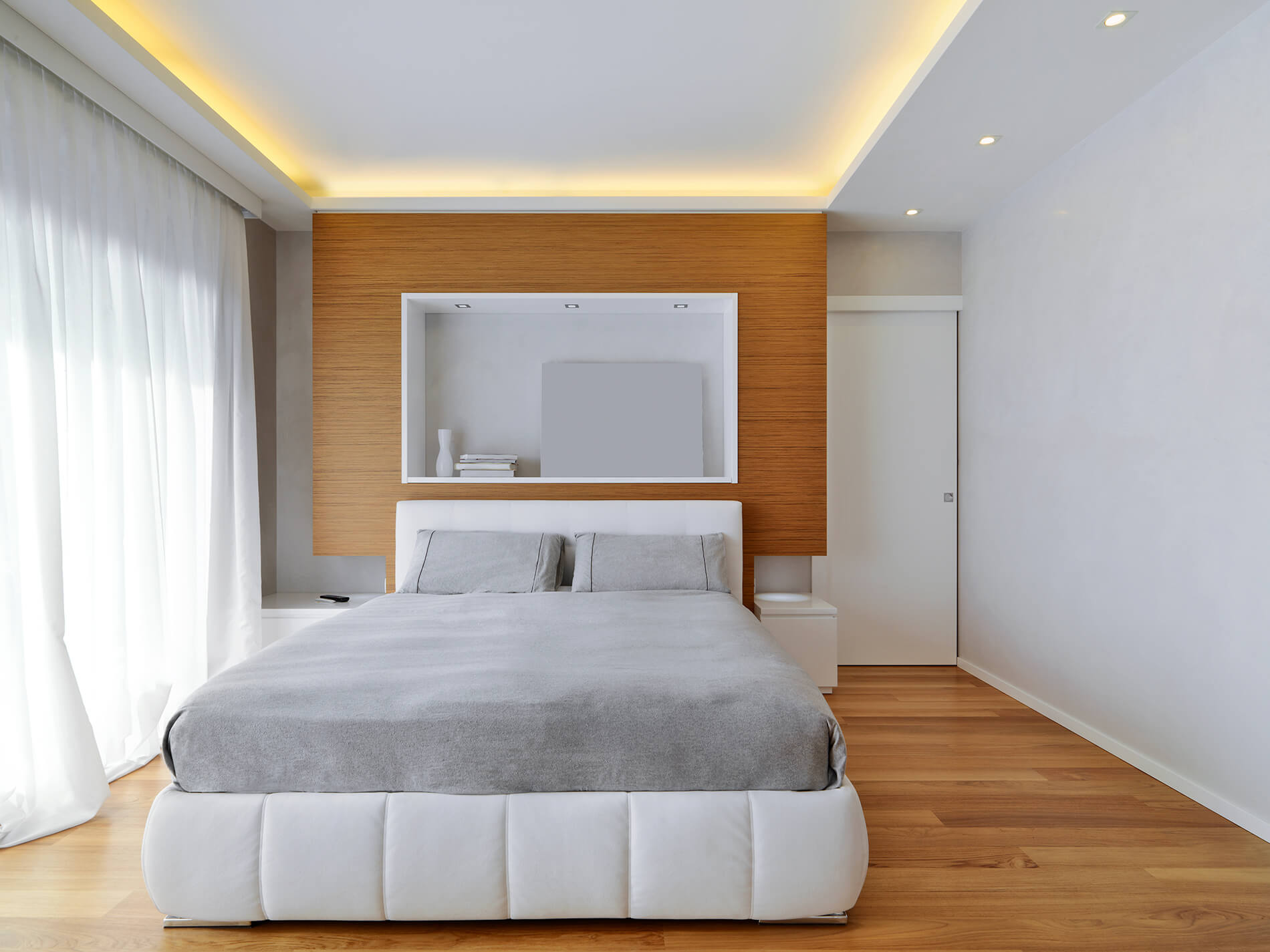
Ceiling lighting has taken on an increasingly important role in interior design. LED strips for ceilings allow you to create spectacular lighting effects: from indirect perimeter lighting that makes the ceiling appear “floating,” to color effects that transform the atmosphere of a room with a simple touch.
Ceiling spotlights, on the other hand, offer targeted and flexible lighting. They can be recessed into plasterboard for a minimal effect, or mounted on tracks for a more industrial look.
To properly design ceiling lighting, it is essential to plan the position of every light point in advance. A 3D design software like ArredoCAD allows you to visualize the effect of different lighting solutions before installation, avoiding costly mistakes and unsatisfactory results.
Exposed beams
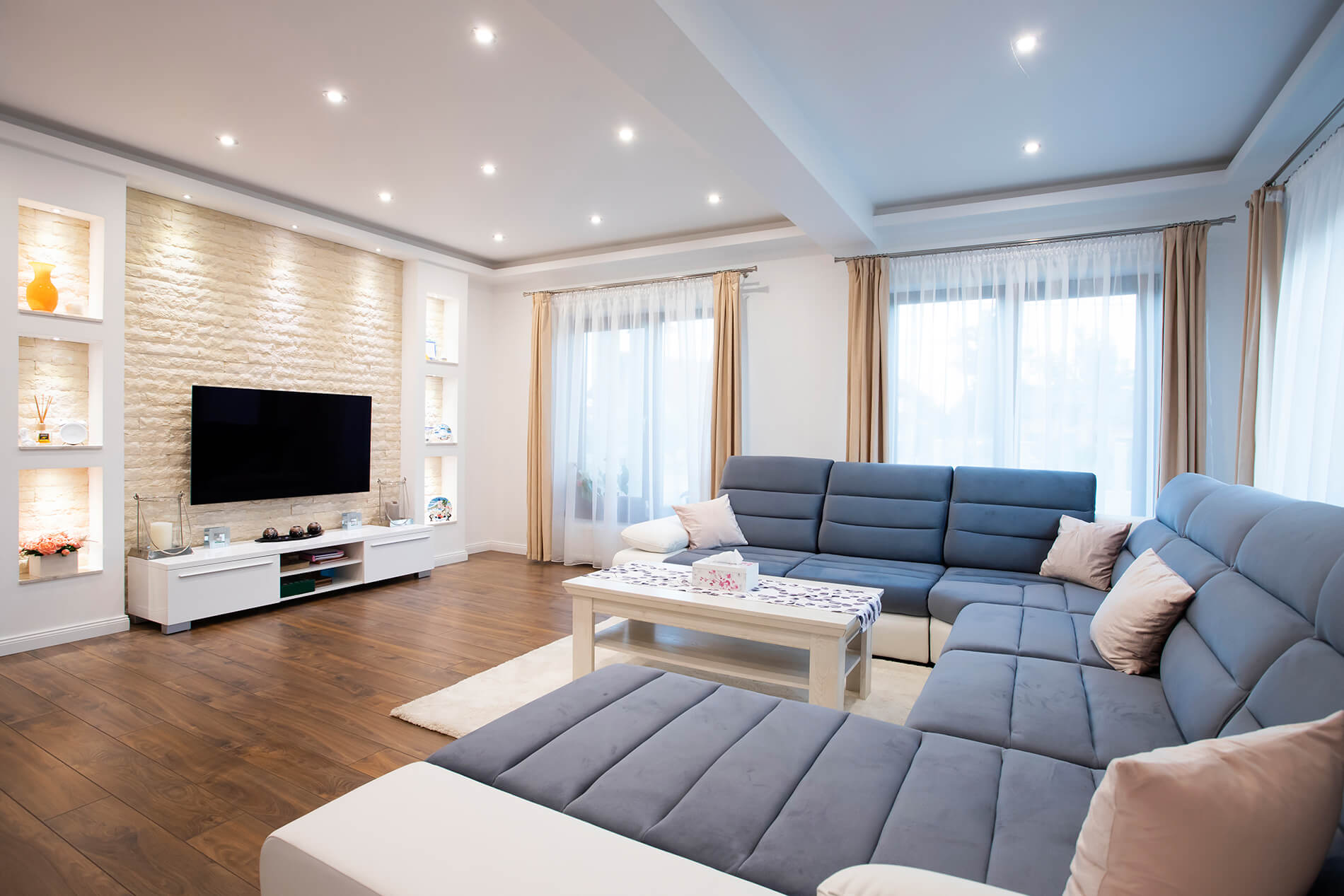
Exposed beams immediately givewarmth and personality to any space. Traditionally associated with country homes and mountain chalets, today they are also used in urban and contemporary contexts to create an interesting contrast with modern furnishings.
If your home doesn’t have structural beams, you can opt for decorative beams in polystyrene or polyurethane that faithfully reproduce the look of wood at a fraction of the cost and weight. These solutions are easy to install and allow you to achieve the desired effect without structural interventions.
A wooden ceiling can also be created with slats or planks that cover the entire surface, creating an enveloping effect particularly suited to bedrooms and living areas. Wood, whether natural or treated with colored finishes, adds texture and visual warmth that no other material can match.
Moldings, ceiling roses, and cornices
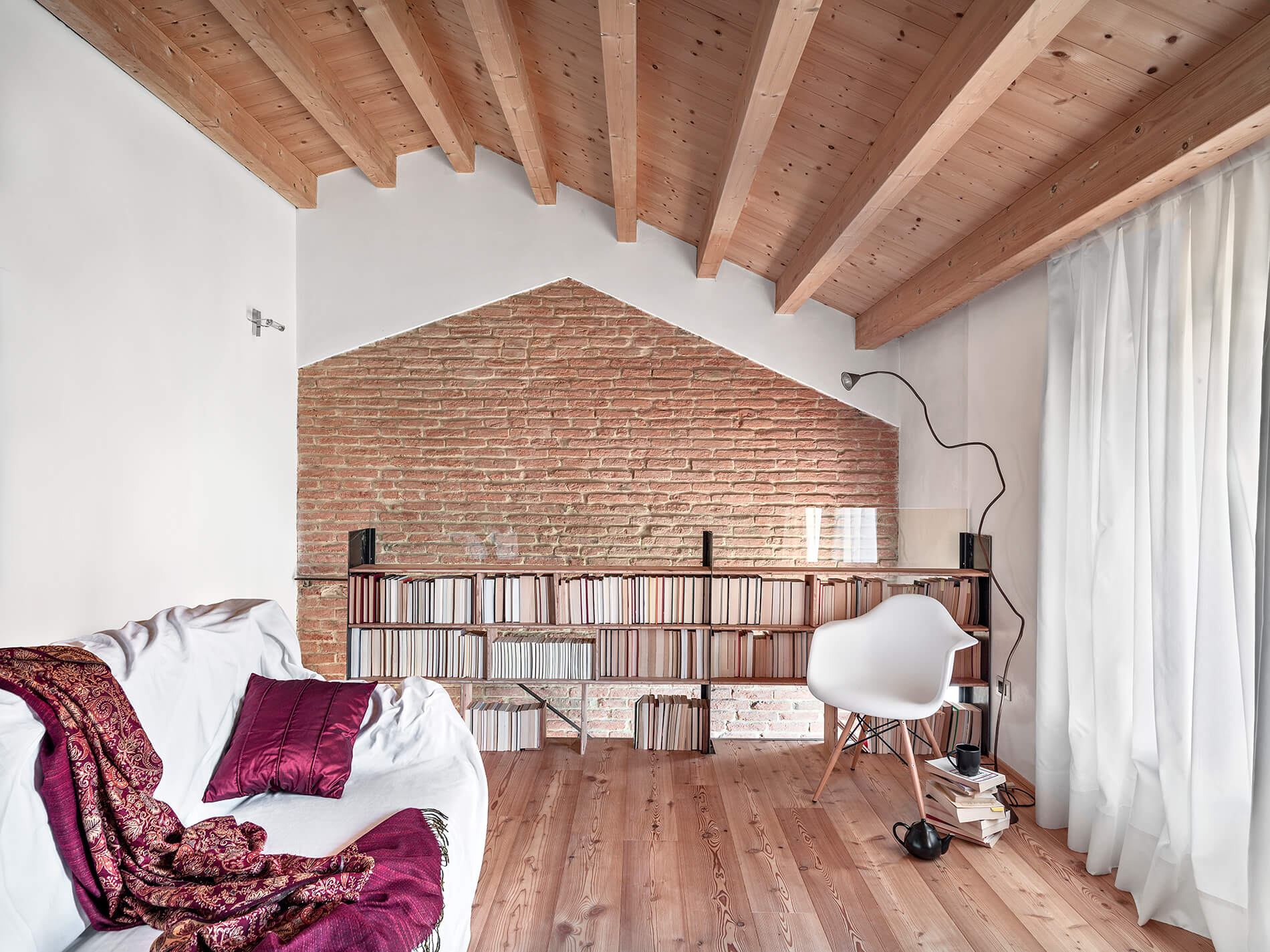
Ceiling moldings represent the decorative solution par excellence in classically inspired interiors. Ceiling roses, perimeter cornices, and plaster moldings create plays of light and shadow that visually enrich the space without appearing excessive.
The ceiling rose, traditionally positioned at the center of the room around the chandelier, can also be used in a contemporary way: a rose with essential geometric lines or painted in a contrasting color becomes a surprising design element.
Ceiling cornices, available in polystyrene, polyurethane, or plaster, define the perimeter of the room by creating an elegant transition between walls and ceiling. This solution is particularly effective for masking imperfections in corners and giving the space a more finished look.
Wallpaper for the ceiling
Applying wallpaper to the ceiling is a fast-growing trend that allows for decorative effects impossible with other materials. Geometric patterns, floral motifs, sky effects, or textured finishes: the possibilities are endless.
Ceiling wallpaper works particularly well in bedrooms, where it creates a canopy-like effect that envelops the space. It can be applied to the entire surface or just to a central portion, perhaps framed with plaster cornices for an even more refined effect.
A practical tip: when opting for wallpaper on the ceiling, it’s best to keep the walls in solid colors to avoid an overloaded effect. The colors of the wallpaper should echo elements already present in the furnishings to create visual harmony.
Decorative panels
Decorative ceiling panels offer the opportunity to add texture and movement to the fifth wall. Available in materials such as polystyrene, PVC, wood, or metal, these modular elements can cover the entire surface or be used to create decorative accents in specific areas.
Three-dimensional panels with geometric or organic patterns represent a solution with great visual impact, particularly suitable for living areas and commercial spaces. Light, whether grazing or overhead, enhances the reliefs, creating shadow plays that change throughout the day.
For those seeking a natural effect, there are panels with faux wood finishes that replicate the look of traditional planks with the advantage of minimal maintenance and a contained cost. This solution is ideal for those who want the warmth of wood without the issues related to humidity and temperature changes.
Ceiling color: how to choose it
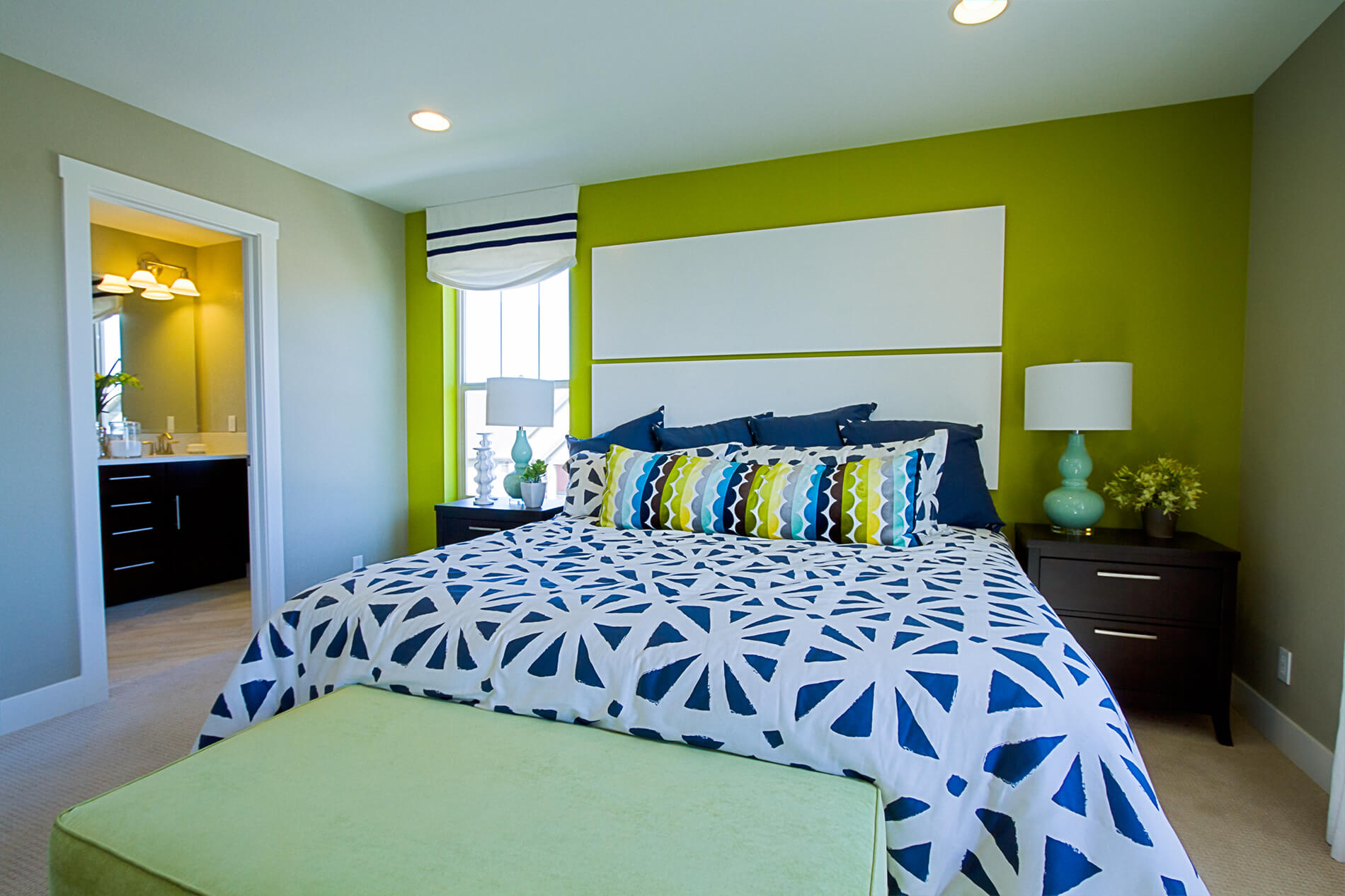
The choice of ceiling color profoundly influences the perception of space. White remains the most common choice because it reflects light and makes rooms appear larger, but it’s not the only possible option. A colored ceiling can radically transform the atmosphere of a room. Dark tones such as midnight blue, anthracite gray, or forest green create an enveloping, comfortable, and intimate effect, particularly suited to bedrooms. Be careful, though: dark colors tend to make the ceiling seem lower, so they are recommended only for rooms with generous heights. A current trend is “color drenching”, meaning painting walls and ceiling the same color to create an immersive effect. This technique works particularly well with
How to enhance special ceilings
Low ceiling: tricks to make it seem higher
A low ceiling can feel oppressive, but there are several strategies to counteract this sensation. The first rule is to opt for light colors: pure white or pastel tones reflect light and visually “push” the ceiling upward. Lighting plays a fundamental role: avoid pendant chandeliers that further reduce perceived height and prefer recessed spotlights or wall sconces that direct light upward. Perimeter LED strips hidden in a cove create a “floating ceiling” effect that increases the sense of height. Furnishings also contribute: low furniture and vertical lines on walls (such as floor-to-ceiling bookcases or curtains that start at the ceiling) draw the eye upward, compensating for limited actual height.
High ceiling: how to furnish your home
If you’re lucky enough to have high ceilings, you can use them as a scenic element. Statement chandeliers finally have the space they deserve, exposed beams can be highlighted without overwhelming the room, and dark ceiling colors create intimacy without feeling oppressive. To prevent the room from feeling cold and dispersed, it’s important to create visual “anchors”: artworks placed high up, bookcases that reach the ceiling, decorative elements that occupy vertical space. A partial false ceiling can also help visually lower certain areas, creating more intimate zones within a large environment.
How to enhance a vaulted ceiling
Vaulted ceilings are an architectural feature of great charm that deserves to be highlighted. The curved shape naturally creates a sense of spaciousness and movement that can be enhanced with the right lighting: adjustable spotlights that illuminate the curve from below create very suggestive soft shadows. As for color, barrel vaults and groin vaults lend themselves well to light-toned finishes that highlight their shape. In bolder contexts, a contrasting color on the vault can transform it into the absolute protagonist of the room.
Attic ceiling: solutions for sloped spaces
The attic presents unique challenges for ceiling decoration, as sloped surfaces reduce usable space. The most common solution is to clad the slopes with wood paneling or plasterboard, creating a uniform surface that can then be painted or decorated. For attics with exposed beams, the choice is between keeping them in their natural color for a rustic effect, or painting them white for a more contemporary and luminous look. Lighting must be carefully designed, making use of natural light from any roof windows and integrating artificial light points in darker areas.
Ceiling decorations room by room
Living room ceiling
The living room is the space where we welcome guests and spend most of our free time: the ceiling therefore deserves special attention. A false ceiling with integrated LED lighting allows you to create different atmospheres depending on the moment: full light for daily activities, soft light for movie nights, accent lighting to highlight furnishings.
If the living room is open plan with the kitchen, the ceiling can help visually define different functional zones. A plasterboard drop above the dining area, a difference in color, or a change in material (for example wood above the living area and plasterboard above the kitchen) create separation without resorting to partition walls.
Bedroom ceiling
In the bedroom, the ceiling is the first thing we see when we wake up and the last before falling asleep: it’s worth making it special. Wallpaper with delicate patterns or a starry sky effect creates a dreamlike atmosphere; soft colors such as blush pink, powder blue, or pearl gray promote relaxation. Ceiling lighting in the bedroom should be warm and adjustable. LED strips hidden behind the headboard or along the perimeter create indirect light perfect for evening reading. Avoid overly powerful spotlights or cold lights that disturb rest.
Kitchen ceiling
The kitchen ceiling must combine aesthetics and practicality. In this room, vapors, odors, and grease splashes can damage delicate materials. For this reason, the best solutions are plasterboard with washable paints, PVC panels, or smooth, easy-to-clean surfaces. Lighting is crucial: the worktop must be well lit with adjustable spotlights or LED strips under cabinets. A central light above the table or island completes the setup. If you have an exposed hood, the surrounding ceiling can be enhanced with a drop or a change of material that frames this element.
Bathroom ceiling
The bathroom is the most humid room in the house, so the ceiling must be made with water-resistant materials and resistant to condensation. Moisture-resistant plasterboard, PVC panels, and stretch ceilings in synthetic materials are the most suitable solutions. Bathroom ceiling lighting requires IP44 spotlights (protected against water splashes) strategically placed: above the mirror for makeup and shaving, in the shower area for safety, and a general light to illuminate the entire space. LED strips can create a spa-like atmosphere if hidden in niches or coves.
How to cover and hide ceiling imperfections
The existing ceiling isn’t always in perfect condition. Cracks, stains, irregularities, or exposed systems may require solutions that conceal these flaws. Here are the most effective options. Plasterboard false ceilings are the most complete solution: they create a perfectly smooth surface that hides any imperfection and allow new systems to be integrated. The downside is that they reduce the room height by at least 5–7 centimeters.
For minor damage, skimming and painting may be sufficient. Ceiling-specific paints have a thicker consistency that helps mask small imperfections. Alternatively, wallpaper with pronounced textures (such as rough plaster effects or fiberglass) effectively covers imperfect surfaces.
Decorative panels represent a middle ground: they are applied directly to the existing ceiling without the need for support structures, hide defects, and add a decorative element. They are particularly suitable for those looking for a quick and relatively economical solution.
Designing the Ceiling in 3D: Visualize Before You Build
Ceiling decoration is an intervention that significantly changes the look of a room. Choosing the wrong color, material, or type of lighting can mean having to redo the work with added costs and loss of time. For this reason, 3D design has become a fundamental tool for interior designers and private users.
An interior design software like ArredoCAD allows you to preview how the decorated ceiling will look in the real context of the room. You can experiment with different solutions, compare materials and colors, evaluate the effect of lighting in different conditions, all before purchasing a single panel or can of paint. The photorealistic rendering function is particularly useful for ceilings: it lets you see how light interacts with surfaces, how colors appear at different times of day, and how decorations integrate with existing furnishings. This level of precision in visualization avoids costly mistakes and helps make informed decisions.
Whether you’re an industry professional or a private individual looking to renovate your home, having a 3D design tool turns a complex project into a creative and controlled process. You can share renderings with family members, clients, or craftsmen, ensuring everyone has the same vision of the final result.
Frequently asked questions about ceiling decoration
How much does a false ceiling lower the height?
A standard plasterboard false ceiling requires at least 5–7 cm. If you need to integrate spotlights or LED strips, calculate 10–12 cm. For HVAC systems or ducting, 20–25 cm are needed. Before proceeding, make sure the remaining height meets legal minimums (2.70 m for living areas, 2.40 m for service rooms).
Is a permit required for a false ceiling?
A simple decorative false ceiling falls under free building activity and doesn’t require permits. However, if the intervention significantly modifies internal height or includes new systems, a CILA (Certified Notice of Commencement of Works) may be required. Always consult a technician for specific cases.
Spotlights or LED strips: which is better?
It depends on the desired effect. Spotlights provide targeted and directional light, ideal for illuminating specific areas. LED strips create diffused, atmospheric light, perfect for scenic effects. The best solution often combines both: spotlights for functional lighting and LEDs for ambient lighting.
Can wallpaper be applied to the ceiling?
Absolutely yes, and it’s a growing trend. Application requires more care than on walls (gravity doesn’t help!), so it’s advisable to rely on a professional. Choose non-woven (TNT) wallpapers, which are more durable and easier to install than traditional cellulose ones.
Visit our news section to stay updated on the latest trends!


