October 2025
An interior design project is never just a set of measurements, materials, and technical solutions: it is an idea that encompasses emotions, atmospheres, and life visions. The designer’s task is to convey all this to the client clearly and engagingly. But words and floor plans alone are often not enough: tools are needed that speak an immediate language capable of touching the emotional sphere.
Visual storytelling is the key to this process: telling a story through images and renders that the client can feel as their own. With ArredoCAD, 3D rendering becomes a true visual narrative, where lights, colors, and details transform the project into an experience the client can already live and imagine.
What is visual storytelling
Visual storytelling is a communication method that uses images and visual sequences to convey meaning immediately, based on scientific principles of perception and memory. It relies on three pillars: dual coding (integration between verbal and visual channels), the picture superiority effect (images are remembered better than words), and Gestalt principles (clear and intuitive perceptual organization). In interior design, this approach allows an abstract project to be transformed into a preview experience: 3D renders not only show the layout of spaces but also communicate atmosphere, emotions, and values, making the client part of an immersive narrative.
Why visual storytelling works
Research in cognitive psychology and communication clearly shows that images have greater persuasive power than text. This happens for several reasons:
- Dual processing channel: the human brain processes verbal and visual information in parallel. When both channels are stimulated, comprehension is faster and memory retention is longer.
- Picture superiority effect: studies show that people tend to remember what they see more accurately and longer than what they read or hear.
- Cognitive load management: integrating words and images reduces message complexity, making processing easier and lowering the risk of overloading working memory.
- Narrative engagement: when a story captures attention and stimulates imagination, it increases its ability to influence. A render built as a visual narrative supports precisely this immersion.
Visual storytelling in interior design
The use of visual storytelling in 3D renders is not just an aesthetic support but a tool that directly influences the client’s cognitive and decision-making processes.
- Experiential anticipation: renders generate a sort of simulated environment trial, approaching the concept of pre-experience. This reduces perceptual uncertainty and strengthens the ability to imagine future use of the space.
- Semiotic alignment: every visual element (furnishings, materials, lighting) takes on symbolic value that helps convey brand identity and positioning. It communicates not only “how it will look” but “what it means.”
- Cognitive efficiency: compared to text descriptions or 2D plans, 3D renders reduce the time needed to build a coherent mental representation. In terms of cognitive ergonomics, this implies a lower processing load and greater availability of attentional resources for critical evaluation.
- Strategic marketing value: renders are not just project tools but high-performing communication assets. Used in catalogs, presentations, or digital campaigns, they act as “visual anchors” that increase recall and purchase intent.
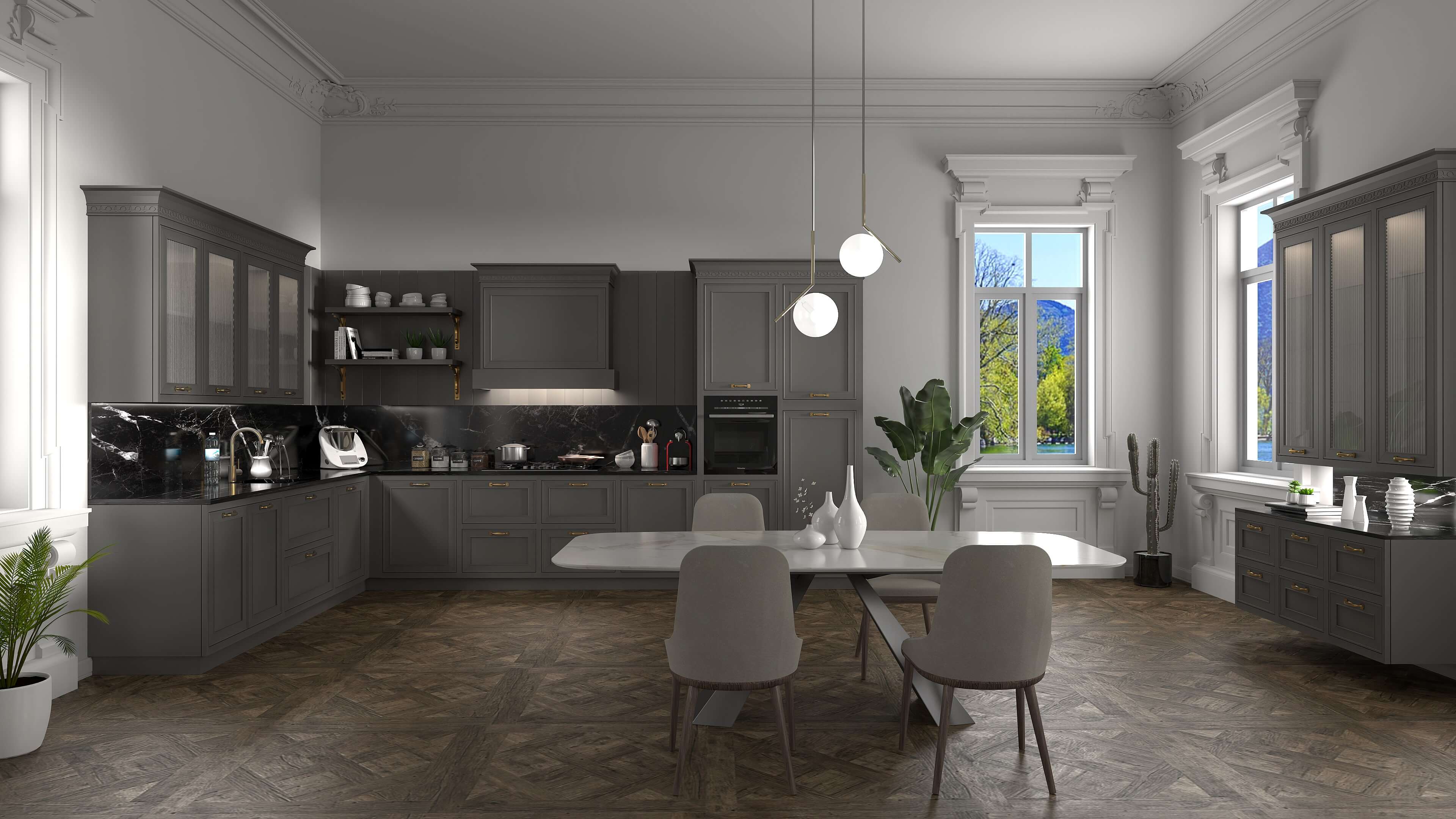
The fundamental elements of a narrative 3D render
A photorealistic render is not limited to technical correctness but must be designed as a narrative device, capable of guiding perception and generating meaning. Key elements include:
- Semantic clarity: each image must convey a precise concept (e.g., modernity, warmth, exclusivity). This occurs through a consistent selection of materials, colors, and symbolic objects, which serve a semiotic as well as aesthetic function.
- Framing and perspective: as in photography, the choice of viewpoint follows principles of visual ergonomics (vanishing lines, figure–ground ratio, rule of thirds), guiding the eye toward narrative focal points and reducing interpretative ambiguity.
- Lighting design: light is not only a technical factor but also an expressive lever. The mix of natural and artificial light, regulated in terms of intensity, temperature, and direction, shapes the emotional tone and volumetric perception of the space.
- Aesthetic consistency: color palettes, finishes, and style must maintain perceptual continuity, avoiding dissonances that interrupt narrative flow. Visual coherence underpins the Gestalt principle of pregnance.
- Contextual details: adding everyday objects creates cognitive anchors that make the environment feel familiar and “livable.” These details facilitate client identification with the scene.
If you want to explore how to build the aesthetic identity of a project, we recommend reading our article dedicated to moodboards in interior design, fundamental visual tools for organizing images, materials, and color palettes.
Where to use renders as a visual storytelling tool
3D renders, when designed with narrative logic, become multifunctional communication tools, applicable in different design and marketing contexts:
- Client presentations: the render acts as an immersive simulation (pre-experience visualization), allowing the client to evaluate the project not only technically but emotionally. This reduces uncertainty and supports purchase decisions driven by emotional anticipation.
- Corporate communication: in catalogs, brochures, and websites, rendered images don’t just display a product but create a narrative frame aligned with brand values. In semiotic terms, the render acts as a visual signifier capable of conveying lifestyles and competitive positioning.
- Social media marketing: designing scenically impactful renders leverages visual engagement principles (attractiveness, contrast, immediacy) to generate interactions. Moreover, publishing consistent visual content strengthens brand identity and recognition on digital platforms.
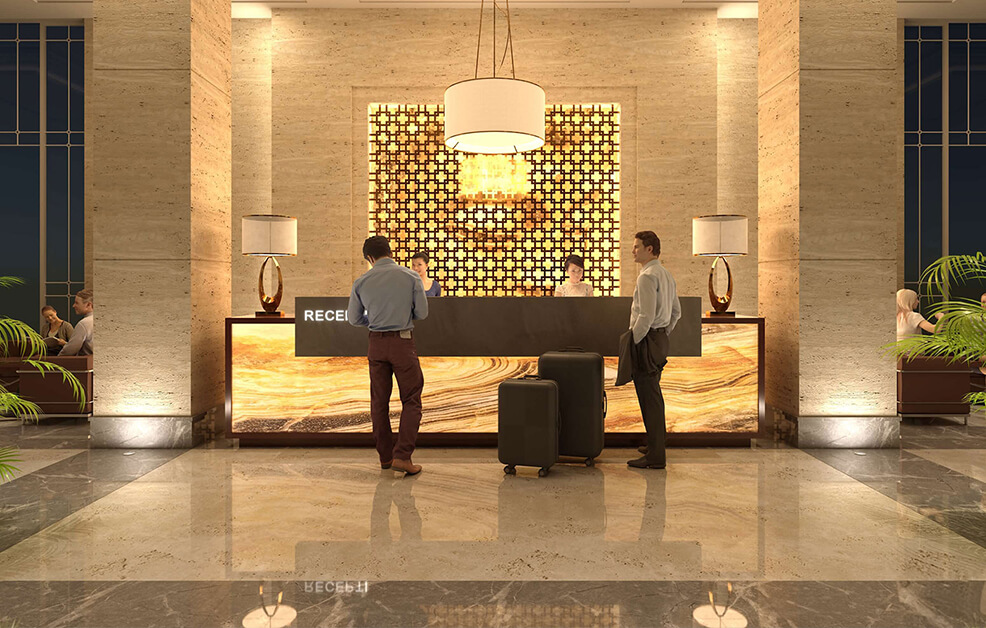
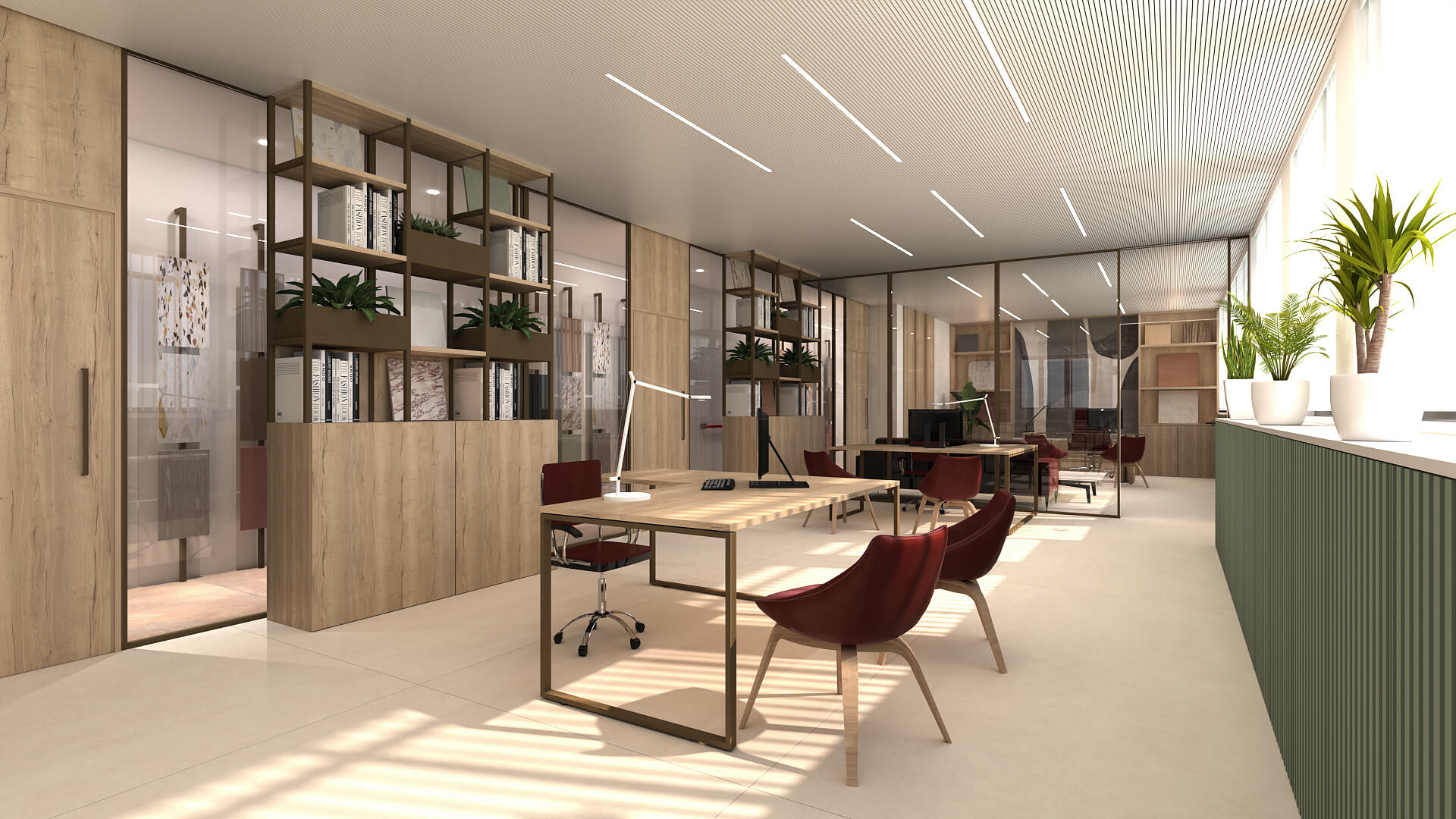
- Commercial and contract projects: in professional contexts (hotels, offices, showrooms), renders function as brand experience tools, translating company values and philosophy into visual environments that communicate status, professionalism, and stylistic coherence.
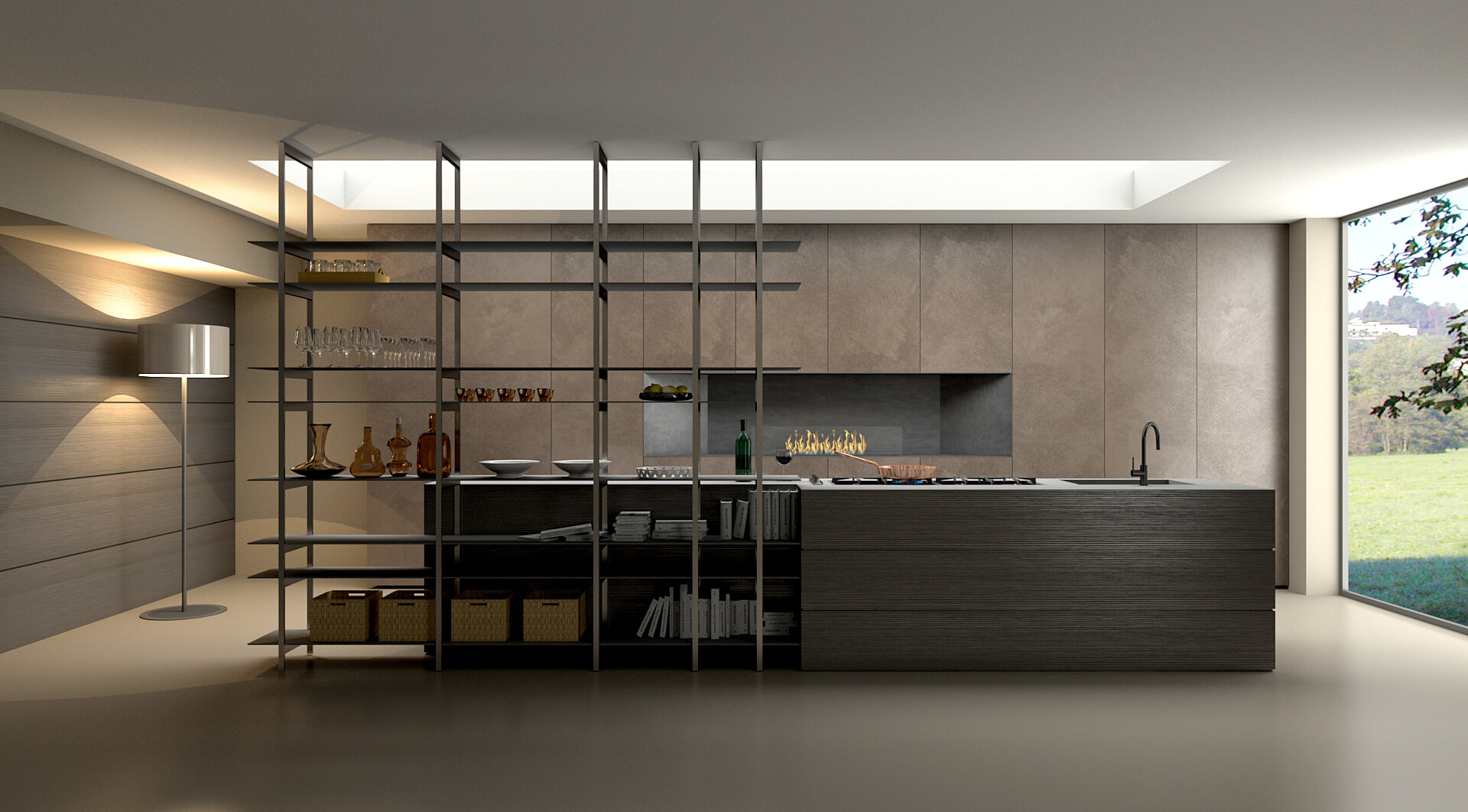
Concrete examples of visual storytelling with 3D renders
Let’s consider the case of a kitchen presented to a client through two different approaches:
- Descriptive render: the image only shows volumes, materials, and furniture layout. It is informative but neutral and does not activate identification processes.
- Narrative render: the scene includes atmospheric variables (natural light entering through windows, calibrated reflections), contextual elements (a set table, dishes, everyday details), and a composition that recalls convivial situations.
From a scientific perspective, the second example activates embodied simulation mechanisms, leading the observer to imagine themselves in the space and project personal experiences into it. This increases the emotional value of the project and reduces the cognitive distance between the client and the represented environment.
ArredoCAD and the power of visual storytelling
With ArredoCAD, every designer can create renders that don’t just show spaces but tell stories. The updated library of furnishings, finishes, and decorative objects makes it possible to build unique and personalized environments, while lighting and framing tools add depth and realism to the visual narrative.
Whether presenting an apartment to a private client or developing the concept of a large commercial project, ArredoCAD helps transform design into an emotional and persuasive visual story.